Socialtools.ru

Thursday, 5 June 2014

Traditional Hungarian embroidery. MATEO

What do we know about Hungary? Wine, goulash, Czardas and paprika - I guess that's all that will be able to transfer the average person, after hearing such a question. However, in this series of original "hungaricums" can truly add and embroidery.

Hungarian traditional embroidery, being a peasant origin, has bright, easily recognizable and diversity. In each district Hungary have their own styles and features of the figure, for which we can calculate the origin embroiderers, however, the largest areas are only two: MATEO and kalocsai.

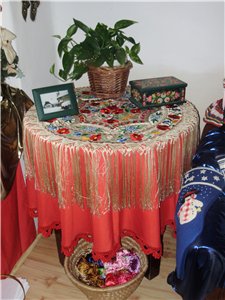
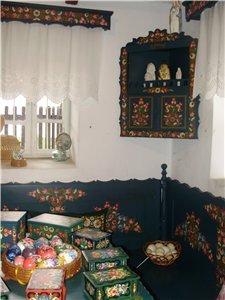
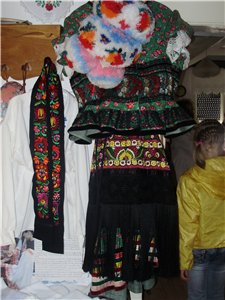
MATEO - the so-called residents Mezciema and surrounding cities tarda and Santistevan. This region is famous for its ornate national costumes, which masters shiny silk threads embroider on a black background amazing floral patterns, which gave the name to the whole direction of the Hungarian embroidery. Interestingly, rich embroidery was used for decoration of women's and children's clothes, but also men's clothing. Embroidery is a protection, a kind of talisman, allowing people MATEO to withstand hardship, falling to its share: full-time occupation of other peoples, of hunger and poverty.
Традиционная венгерская вышивка          Традиционная венгерская вышивка
Popular legend has it that during the Turkish yoke enemies captured a local young man in love with a girl from the edge of Mato. Unfortunate bride begged the Sultan to return to her beloved, that the Sultan has made a condition to pay for the groom unusual redemption: in the middle of winter to bring him a gift apron full of flowers. Young mistress embroidered apron variety of garden and field flowers and presented it to the Sultan. The Governor was amazed at her resourcefulness and being a man of his word, he let go of her spouse needlewomen.
 Традиционная венгерская вышивка 
In mezőkövesd there is a Museum dedicated to the life of Mato, in which much attention is paid to the embroidery. In addition, a rich collection of drawings and designs of traditional embroidery gathered in the House-a monument of the famous masters of Borbely Molnar gáspár Martone, bearing the nickname of his grandfather, Bori Kish Janko. She was one of the inspirers of embroidery, MATEO. According she created paintings many generations of women have put into their magnificent aprons, blouses, skirts, tablecloths and linens. Today in the House-monument Bori Kish Janko is possible to get acquainted with ancient embroidery designs and also to try their hand embroidery across bust silk threads bright flower on the fabric.
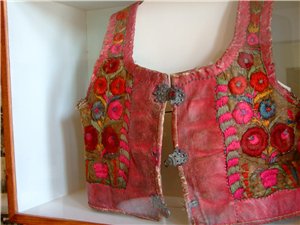
 
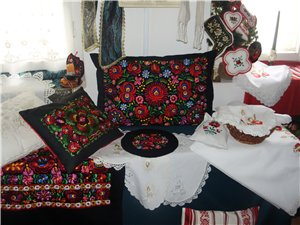
Embroidery, Mato easily recognized by the large rose in the center of the picture, framed numerous small motifs, each of which has its own meaning. In addition, special sense and color embroidery. So, yellow color means the sun, black - force of the earth, the blue - sadness, green - mourning. Itself embroidery is satin stitch, are used silk thread and dense cloth, usually white or black.
 Традиционная венгерская вышивкаТрадиционная венгерская вышивка
Due to isolation and solidarity of the people of Mato this style of embroidery has remained virtually unchanged, differing from other styles of his personality and the astounding

Sunflowers

download


scheme for embroidery


The Scheme "The Hunt"

Triptych MAKI

Friday, 22 October 2010

The origins of embroidery


World of embroidery is so varied that the enumeration of the different types of the craft will take one hour.

The origins of art embroidery are in the past, in the first inept stitch ancient man, who decided to stand out somehow, adorning their clothes. Therefore, doing handicraft, you kind of do a magical rite of unity with ancestors.

Most fans of embroidery do it for fun (anything yourself: the hour of the night, you receive back pain and pain in the eyes!..), and for the final result and, to be Frank, for the sake of admiring glances and praise of others.

We live in a progressive age, experience constant stress, faced with problems... so sometimes you want to sit in a comfortable chair, to avoid being disturbed, and not bothered with questions, and to embroider, sew, embroider... well, you can and put a little. After all, any needlework calms the nerves (of course, if it turns out as expected), although doctors reason not prescribe it as medicine.

In ancient times embroidery was very common: on manufactured at home tissues was no ornament. Modern light industry indulge us with abundance. Sometimes it's so hard to choose what to leave so did not bought, and I think that, don't be such diversity, to define what it wants, it would be easier.

The number of ways of embroidery is enormous. There are colored and white embroidery thread.

Color embroidery is a very ancient form of needlework and often competes with the visual arts. It can be performed not only ornaments, but the whole scene with figures of humans or animals against the background of nature or architecture. Color embroidery, you can perform a variety of ways. At the same time, the white embroidery thread on white fabric is used mainly for various ornaments.

Some types of embroidery is known worldwide, for example stalked stitch, embroidery a cross, Richelieu, English embroidery, Mat. Others appeared in the early 19th century, for example graceful parallel seam, seam Rodi, leaning seam, Palestinskiy seam.

It is believed that the art of embroidery has come to us from the East. Since the beginning of the millennial Chinese civilization survived the characters are embroidered on clothes, bedspreads, blankets, burial shrouds.

In Ancient Egypt, Greece, the Babylonians, the Jews, the Romans also embroidered bed linen, blankets, clothing, togas.

In the middle Ages the European nobility, and especially the Church, borrows embroidery from the Byzantine Empire. To 1031 dates back Riza St. Stephen's Cathedral with thousands of embroidered figures which, according to legend, a double gold thread purple silk embroidered Queen. Stitch zigzag, or Hungarian embroidery, proves the creativity of this country.

In the 14th century is very widespread as a colored embroidered with pearls and gold and embroidery in black thread on white fabric. It is used in the design of men's and women's shirts, handkerchiefs and even baby diapers.

Very fashionable were to embroider the motto and logo on clothing, especially on the left sleeve. Charles of Orleans ordered to embroider on the sleeve lyrics with music, which presents the gems of gold.

Not so long ago, in the 19th century, embroidery United all States: it was developed by a peasant in the long winter evenings, free from field work, and noble young ladies from idleness. And each embroiderer did the work of artist-designer, because printed circuits were very rare, and they conducted a real hunt. Sometimes they even had to maintain relationships with friends just for the sake cherished scheme. Now a variety of schemes crazy, but a modern ladies sometimes do not have enough time to do what they love, and they join the ranks of sleepless in towns and villages, tearing off for needlework hours of rest.

It is unknown when the ornamental embroidery became embroidery story, and who was the author of the first picture. But... thank you so much. Using embroidery, you can create copies of great paintings (of course, with inaccuracies, but it's nice to feel the Creator of the mysterious "Mona Lisa"!).

Today plot embroidery displaces ornamental. Modern man has forgotten how to understand encrypted in the ornaments of the message of the ancestors about the world and man's place in it - we have no time for it, and to read a book much easier. Another thing plot: looked and it seems everything is clear. Of course, the artist, creating a picture, puts in her feelings and emotions, to understand who is not given to everyone. And if the picture embroidered - imagine how much effort and diligence invested in this painting, how much patience in every stitch made by the embroiderer. Appreciate the painstaking work, in which lives the soul of man, his energy and which will never replace the machine.